




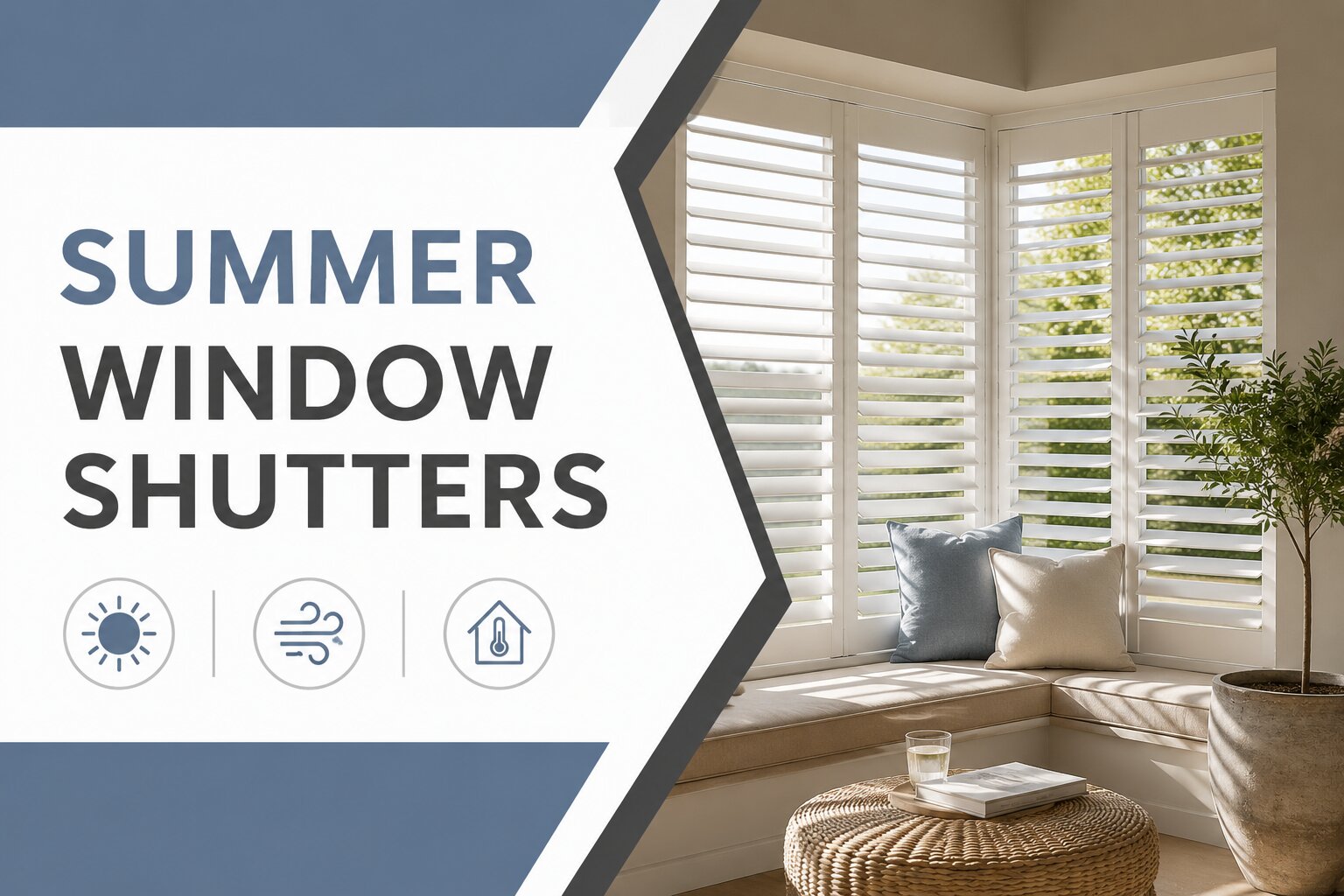
Summer Window Shutters for Cooler Suffolk Homes
Quick answer: Plantation shutters reduce solar heat gain by blocking direct sunlight at the window, creating an insulating air barrier and giving you precise control over airflow via adjustable louvres — all without plunging your rooms into darkness. For Suffolk homes dealing with summer overheating, they're one of the most effective and attractive solutions available.
You know the drill. It's a warm Tuesday in July, the sun's been hammering that south-facing front room since 10am, and by early afternoon it's genuinely unpleasant. The curtains are shut, the room feels dingy, and you're still too hot. Sound familiar?
Suffolk doesn't always get the credit it deserves for summer sunshine — but anyone who's lived in an Ipswich terrace, a period home in Woodbridge or a newer build near Felixstowe will tell you that some rooms can get seriously uncomfortable once the sun gets going. And with UK summers trending warmer year on year, that greenhouse effect at the window is becoming harder to ignore.
The good news? You don't need air conditioning, blackout blinds or a room full of fans to fix it. Summer window shutters are a genuinely effective, long-lasting solution — and they keep rooms light, airy and actually pleasant to be in, which is the bit most people care about most.
In this post, we'll explain how shutters reduce heat, which styles work best in different rooms and situations, and how to use them day-to-day to keep your home cooler throughout summer.
How shutters actually help keep your home cool

Let's skip the physics lecture and get to what matters. Windows are where most of the heat problem starts. Glass doesn't filter sunlight — it lets it straight through, and once that solar energy hits your floors, furniture and walls, it converts to heat and stays there. South-facing rooms and large bay windows are the worst offenders.
Plantation shutters tackle this at the source. Their louvres (the adjustable slats) let you block direct sunlight before it reaches the inside of the room, rather than trying to deal with heat that's already built up. That's a fundamentally more effective approach than drawing curtains after the damage is done.
When the louvres are closed or angled, the shutters also create a layer of still air between the window glass and the room — and still air is a surprisingly effective insulator. Research suggests plantation shutters can reduce solar heat gain by up to 65% on south-facing windows and up to 77% on west-facing ones. That's a meaningful difference in how a room feels by mid-afternoon.
The other big advantage? Control. Tilt the louvres downward and you can bounce light up towards the ceiling, keeping a room bright without the direct glare. Open the panels slightly and you get natural ventilation. It's precision you just don't get with standard curtains or blinds.
Shutters vs curtains and blinds in hot weather

Curtains have their place, but in summer they can work against you. Heavy fabric absorbs heat and radiates it back into the room. Even when drawn, they don't create an efficient barrier against solar gain — and they can make a room feel stuffy and dark at the same time. Not ideal.
Standard blinds are better, but most give you a binary choice: up or down. You lose the ability to fine-tune light direction and airflow without fully exposing the window.
If you've been searching for heat reducing blinds or cooling blinds in Suffolk, shutters are worth a serious look. They offer everything a good blind does, plus the added benefit of adjustable louvres, a proper fitted finish and the ability to open sections independently — especially useful with tier on tier and full height styles.
They also look considerably better, which matters when they're going on windows you see every day.
The best shutter styles for summer comfort
Not every shutter suits every room or window, so here's a quick run-through of what works well and where.

Full height shutters
Full height shutters cover the entire window from top to bottom and are one of the most popular choices for bedrooms and front-facing living rooms. They give you total control over light and heat, and the clean finish suits both modern and older properties well.
Cafe style shutters
Cafe style shutters cover just the lower half of the window, leaving the top open. They're brilliant for street-facing rooms in places like Ipswich town centre or terrace houses in Woodbridge — you get privacy from passers-by while still letting in natural light and a decent breeze through the upper section.
Tier on tier shutters
Tier on tier shutters have separate top and bottom panels that operate independently. It's a flexible option for rooms where your needs change throughout the day — open the top for morning light, keep the bottom closed for privacy, then switch things around in the afternoon when the sun moves round.
Victorian bay window shutters
Suffolk has plenty of period homes, particularly in and around Ipswich, Woodbridge and the coastal towns. Bay window shutters are one of the most effective solutions for these spaces — they follow the angles of the bay, manage direct sun from multiple directions, and suit the character of the property far better than a roller blind ever could.
Shaped and angled shutters
Got a loft room, gable end window or a more unusual shape? Shaped shutters are made to follow the exact lines of the window, and they're particularly useful in conversion spaces that can trap heat on warm days.
Conservatory shutters
Conservatories are notorious for overheating. Conservatory shutters help manage glare and solar gain significantly, making the space usable on days when it would otherwise be impossible to sit in comfortably.
Room-by-room tips for staying cool with shutters
Bedrooms: Angle the louvres to block the early morning sun if your bedroom faces east. You still get some ambient light without being woken up by direct glare — and a cooler room makes a noticeable difference to sleep quality on warm nights.
Living rooms: Tilt the louvres upward to bounce light towards the ceiling. This keeps the room bright enough to feel pleasant without the sun streaming directly onto your sofa or TV screen. No more squinting at daytime telly.
Kitchens: Balance brightness with shade by keeping the louvres at a mid-angle. Shutters in kitchens are also easy to wipe down, which is a genuine practical plus in a room that gets messy.
Bathrooms: Angle the louvres to let light in from above while blocking the view from outside. You'd be surprised how much more pleasant a bathroom feels with decent natural light and proper privacy at the same time.
Home offices: Reduce screen glare by keeping the louvres tilted away from direct sunlight. A cooler, less glary environment makes a real difference when you're trying to concentrate on a warm afternoon.
A simple summer routine: getting the best out of your shutters

This doesn't need to be complicated. A rough daily routine works well for most homes:
Morning: Close or angle the louvres on whichever side catches the early sun. Let light in on the shaded side.
Midday: On south-facing windows, keep louvres angled downward to bounce light upward and shade the room from direct heat.
Afternoon: Adjust for where the sun has moved — west-facing rooms often need attention from around 2–3pm onwards.
Evening: Open up panels or tilt louvres to let cooler air circulate as temperatures drop.
It takes about 30 seconds and makes a genuine difference by the time you go to bed.
Why made-to-measure matters (especially in older Suffolk homes)
Off-the-shelf window coverings are a compromise. Gaps around the edges let heat in, look untidy, and undo a lot of the practical benefit. This is why getting the measuring right is the most important part of the whole process.
Older Suffolk properties — Victorian terraces, bay-fronted semis, period cottages — often have window frames that aren't perfectly square, deep recesses and unusual reveals. We work in these homes regularly, and we know that rushing the measuring stage leads to shutters that don't quite fit, don't quite look right, and don't do the job properly.
We take our time on the measuring visit, and that's not a small thing. It's where a good installation actually starts.
Getting shutters fitted in Suffolk: what to expect
Working with us is straightforward. Here's how the process goes:
Get in touch — call, email or fill in the contact form. Photos are helpful, particularly for bays or shaped windows.
Home visit and measuring — we'll come to you, take accurate measurements and talk through styles, colours, louvre sizes and finishes.
Clear quotation — you'll receive a straightforward quote with no confusing extras. We'll explain lead times and any current offers.
Shutter fitting — we protect your home, work neatly and make sure everything opens, closes and lines up as it should.
Final check — before we leave, we'll show you how everything works and make sure you're happy.
We're a Which? Trusted Trader and have been recognised in the 2021 Home and Garden Awards. We cover Ipswich and the wider Suffolk area, including Woodbridge, Felixstowe, Stowmarket, Needham Market, Hadleigh, Sudbury, Bury St Edmunds, Saxmundham, Aldeburgh and surrounding villages.
Selected shutter ranges come with a lifetime guarantee, and some styles can be fitted in as little as two weeks.
Frequently asked questions
Do shutters really help reduce heat in summer?
Yes, meaningfully so. Plantation shutters block direct sunlight at the window before it converts to heat inside the room. When closed, they also create an insulating air layer between the glass and the room. Research indicates they can reduce solar heat gain by up to 65% on south-facing windows — a noticeable difference in how a room feels by midday.
What are the best summer window shutters for south-facing rooms?
Full height shutters with a mid-rail give you the most flexibility, allowing you to angle the top and bottom louvres independently. Tier on tier shutters are also an excellent choice. Both let you manage light and heat precisely throughout the day as the sun moves position.
Are shutters better than heat reducing blinds?
For most homes, yes. Shutters offer better insulation, more precise light and airflow control, and a more durable, fitted finish. If you're searching for cooling blinds in Suffolk, it's worth comparing directly — shutters typically outperform standard blinds on heat reduction, longevity and appearance.
Which shutter style is best for bay windows in Suffolk period homes?
Victorian bay window shutters, made to measure, are the right choice. They're shaped to follow the angles of the bay exactly, which matters a great deal in period properties where the geometry isn't always straightforward. They look far more in keeping than a roller blind stretched across the opening.
Can I keep privacy and still let light in?
Absolutely. Angling the louvres lets you reduce visibility from outside while still allowing plenty of natural light into the room. Cafe style shutters are particularly good for this — they cover the lower half of the window (where most of the overlooking happens) while leaving the top fully open.
How long does it take to get shutters fitted in Suffolk?
It depends on the style, material and window size, but selected ranges can be fitted in as little as two weeks. We'll give you clear lead times when we send your quote so there are no surprises.
Do you fit shutters in Ipswich and nearby towns?
Yes. We cover Ipswich and the wider Suffolk area, including Woodbridge, Felixstowe, Stowmarket, Needham Market, Hadleigh, Sudbury, Bury St Edmunds, Saxmundham, Aldeburgh and surrounding villages. If you're unsure whether we cover your area, just give us a call.
Do shutters come with a guarantee?
Selected products include a lifetime guarantee. We'll explain the specific guarantee details clearly during your consultation so you know exactly what's covered before you commit to anything.
Ready to stop roasting? Let's talk shutters.
If you've got a room that overheats in summer — or you're just tired of choosing between darkness and discomfort — we'd love to help. We supply and fit made-to-measure plantation shutters across Ipswich and Suffolk, and we'll give you honest, straightforward advice on what'll work best for your windows, your rooms and your budget.
Get in touch to book a free home visit and we'll take care of the rest — from measuring to fitting to final check.
